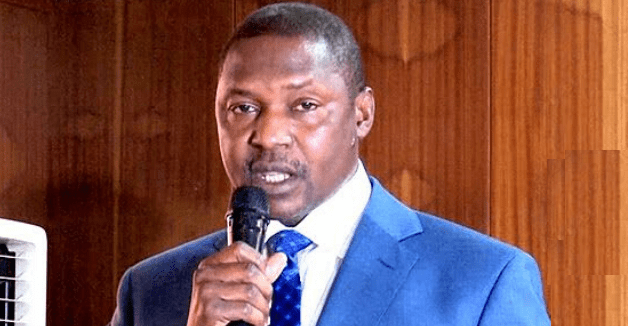

In a landmark ruling on Tuesday, Justice Emeka Nwite of the Federal High Court, Abuja, ordered the interim forfeiture of 57 properties valued at ₦213.2 billion linked to the former Attorney-General of the Federation and Minister of Justice, Abubakar Malami, and his sons. The properties, spread across Abuja, Kebbi, Kano, and Kaduna states, are suspected to be proceeds of unlawful activities. This decision follows the arraignment of Malami and his sons by the Economic and Financial Crimes Commission (EFCC) on multiple fraud charges. The court’s order represents a significant milestone in Nigeria’s ongoing efforts to combat corruption and recover illicitly acquired assets.
Background of the Case and Legal Proceedings
The Economic and Financial Crimes Commission (EFCC) initiated legal proceedings against Abubakar Malami and his sons, Abdulaziz Malami and Abiru-Rahman Malami, on allegations of fraud and unlawful acquisition of assets. The EFCC accused them of amassing wealth through corrupt means during Malami’s tenure as Attorney-General of the Federation.
Following the arraignment, the EFCC filed an ex-parte application seeking the interim forfeiture of several properties believed to be proceeds of crime. Justice Emeka Nwite granted the application after reviewing evidence presented by EFCC counsel Ekele Iheanacho, signaling the court’s resolve to support anti-corruption efforts.
The court ordered the interim forfeiture of 57 properties, instructing the EFCC to publish the order in a national newspaper. This publication invites any interested parties to show cause within 14 days why the assets should not be permanently forfeited, ensuring due process and transparency.
Details of the Forfeited Properties
The assets ordered for forfeiture include a diverse portfolio of real estate spanning multiple states and the Federal Capital Territory. These properties range from luxury residential buildings and commercial plazas to hotels, schools, filling stations, warehouses, and large parcels of land.
Among the notable properties is a luxury duplex located at Amazon Street, Maitama, Abuja, initially purchased for ₦500 million in 2022 but now valued at nearly ₦6 billion after enhancements. Another significant asset is the former Harmonia Hotels Limited building in Garki, Abuja, acquired in 2018 for ₦7 billion.
Other high-value properties include the Meethaq Hotels Ltd in Jabi, Abuja, a five-storey building with 53 rooms valued at over ₦8 billion, and a luxurious hotel in Maitama valued at almost ₦13 billion following rehabilitation. The portfolio demonstrates a pattern of substantial investments made within a relatively short timeframe.
Geographical Spread and Strategic Significance
The properties are strategically located across four Nigerian states—Abuja (Federal Capital Territory), Kebbi, Kano, and Kaduna—highlighting the extensive reach of the assets linked to Malami and his family. This geographical spread exemplifies the diversification of investments often associated with illicit wealth accumulation.
In Abuja, the capital city, the assets include prime residential and commercial real estate in prestigious districts such as Maitama, Asokoro, and Garki. These areas are known for their high market values and significance in Nigeria’s administrative and business landscape.
In the northern states of Kebbi, Kano, and Kaduna, the properties include large parcels of land, commercial plazas, warehouses, and residential estates. These locations are crucial economic hubs, further emphasizing the breadth and value of the seized assets.
EFCC’s Role and Enforcement Actions
The Economic and Financial Crimes Commission has played a pivotal role in uncovering and prosecuting cases of corruption and financial crimes in Nigeria. The agency’s investigation into Malami and his sons involved tracing asset acquisitions and financial transactions believed to be linked to illicit activities.
EFCC’s counsel Ekele Iheanacho successfully petitioned the court for an interim forfeiture order, a crucial legal mechanism that allows the government to seize assets temporarily while investigations and prosecutions proceed. This prevents the potential dissipation or concealment of suspected proceeds of crime.
The commission has also been tasked with publishing the forfeiture order to ensure public awareness and invite objections or claims from third parties. This procedural step safeguards the rights of any genuine stakeholders and enhances the transparency of the forfeiture process.
Legal Implications and Future Proceedings
The interim forfeiture order is a significant legal step but not the final judgment. Interested parties have 14 days to respond and contest the forfeiture, after which the court will determine whether to grant permanent forfeiture of the assets to the Federal Government.
The case has been adjourned to January 27, 2026, for a compliance report, allowing time for due process and further investigation. This timeline reflects the complexity and high-profile nature of the litigation, ensuring thorough judicial scrutiny.
Permanent forfeiture, if granted, would transfer ownership of the assets to the government, enabling their utilization or sale to benefit public coffers. This outcome aligns with Nigeria’s legal framework aimed at deterring corruption and recovering stolen public funds.
Public and Political Reactions
The court’s decision has generated widespread public interest given the high profile of the individuals involved. Many Nigerians view the ruling as a positive step towards accountability and the fight against entrenched corruption within the nation’s political elite.
Critics have called for continued transparency and rigorous enforcement to ensure that justice is served without political interference. The case underscores the challenges of prosecuting high-ranking officials but also highlights the growing institutional capacity of anti-corruption agencies.
Political analysts emphasize the importance of safeguarding the independence of the judiciary and law enforcement agencies to maintain public confidence in Nigeria’s legal and governance systems.
Impact on Nigeria’s Anti-Corruption Efforts
This forfeiture order reinforces Nigeria’s commitment to combating corruption and recovering assets suspected to be acquired through illicit means. It sends a strong message to public officials and the wider society that unlawful enrichment will not be tolerated.
The case also highlights the evolving legal tools available to Nigerian authorities, such as interim forfeiture orders, which help preserve assets during lengthy investigations. These mechanisms enhance the effectiveness of anti-corruption enforcement.
Moreover, successful asset recovery initiatives can boost public trust in government institutions and encourage greater citizen engagement in the fight against corruption, contributing to improved governance and economic development.
Looking Ahead: The Road to Justice and Asset Recovery
As the case progresses, close attention will be paid to the legal arguments presented by both the EFCC and the defense. The outcome will have implications not only for the individuals involved but also for Nigeria’s broader justice system and anti-corruption framework.
Ensuring due process and adherence to legal standards will be critical to upholding the rule of law while delivering justice. The government’s ability to effectively manage and utilize recovered assets will also be under scrutiny to maximize public benefit.
Ultimately, this case could serve as a precedent for future asset forfeiture and corruption prosecutions, strengthening Nigeria’s institutional resilience and commitment to transparency and accountability.
Conclusion
The interim forfeiture order of ₦213.2 billion worth of assets linked to former Attorney-General Abubakar Malami and his sons is a landmark event in Nigeria’s ongoing fight against corruption. This decisive legal action by the Federal High Court, supported by the EFCC’s rigorous investigation, underscores the country’s commitment to transparency, accountability, and the rule of law. As the case unfolds, it will test the robustness of Nigeria’s judicial system and its ability to reclaim public resources misappropriated through unlawful means. The outcome will not only impact the individuals involved but also set important precedents for future anti-corruption enforcement, reinforcing Nigeria’s resolve to eradicate corruption and promote good governance.