
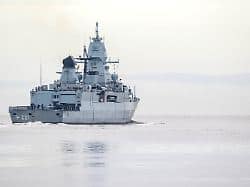

On February 27, 2024, the German Navy’s frigate “Hessen” faced its first hostile engagement in the Red Sea, repelling two drone attacks launched by the Yemeni Houthi militia. Stationed to safeguard merchant shipping lanes within the EU’s Aspides mission, the “Hessen” demonstrated its defensive capabilities amid rising tensions linked to regional conflicts and escalating threats from Iran-backed militias. This incident highlights the growing complexity of naval operations in one of the world’s most crucial maritime corridors and the increasing risks faced by naval forces tasked with protecting global commerce.
The Strategic Importance of the Red Sea and the Role of the Frigate “Hessen”
The Red Sea is a critical maritime artery connecting the Mediterranean Sea via the Suez Canal to the Indian Ocean, facilitating a significant portion of global trade between Europe, Asia, and Africa. Any disruption in this corridor can have profound economic consequences worldwide. The German frigate “Hessen” was deployed as part of the EU’s Aspides mission to ensure the safe passage of merchant vessels through this volatile region.
The deployment of the “Hessen” comes amid increasing threats from militant groups, specifically the Iran-aligned Houthi militia in Yemen, who have targeted commercial shipping to exert pressure on regional adversaries. With 240 soldiers aboard, the frigate is equipped to respond to a variety of threats including missile strikes, drone incursions, and small boat attacks, reflecting the multifaceted dangers in modern naval operations.
Germany’s Bundestag authorized the mission just days before the incident, underscoring the urgency and gravity of the security situation. The “Hessen” had already sailed from Wilhelmshaven in early February to be operational immediately after parliamentary approval, signaling Germany’s commitment to international maritime security and regional stability.
Details of the First Houthi Drone Attack Repelled by the “Hessen”
On the evening of February 27, 2024, the “Hessen” detected an incoming hostile drone targeting the frigate. The crew swiftly engaged defensive protocols and successfully neutralized the threat, marking the first time the vessel had to actively defend itself during its mission in the Red Sea. This rapid response demonstrated the crew’s high level of preparedness and the frigate’s advanced defense systems.
Shortly after the first engagement, a second drone approached the “Hessen”. Once again, the crew initiated defensive measures, successfully intercepting the second target. These coordinated defensive actions prevented potential damage to the vessel and ensured the continued safety of both the crew and the commercial shipping lanes under their protection.
The Bundeswehr’s operations command confirmed these events via social media around midnight, emphasizing the professionalism and effectiveness of the frigate’s response. This incident also marked a critical test of the “Hessen”’s capabilities in a real-world hostile environment, validating the strategic decision to deploy the vessel to the Red Sea.
The Broader Context: Houthi Militia’s Escalating Maritime Threats
The Houthis, an Iran-aligned armed group based in Yemen, have intensified their attacks on maritime traffic in the Red Sea as part of a broader strategy to retaliate against Israeli military actions in Gaza. Since the October 7 Hamas attacks on Israel, the Houthis have targeted merchant ships, aiming to disrupt one of the world’s busiest shipping lanes and apply geopolitical pressure.
To date, at least 48 commercial vessels have been attacked by the Houthis, utilizing drones, missiles, and reportedly underwater weapons. Their growing arsenal and willingness to escalate hostilities pose a significant challenge to international maritime security, prompting coordinated responses from regional and global powers.
The Houthi leader Abdel-Malik al-Houthi has openly declared intentions to expand attacks on shipping in the Red Sea, making clear that escalation is a deliberate tactic in response to the situation in Gaza. This stance has increased the urgency for multinational naval forces to enhance protective measures for commercial vessels navigating these waters.
International Naval Cooperation: The EU’s Aspides Mission and Allied Efforts
The EU’s Aspides mission represents a multinational effort to protect merchant shipping from asymmetric threats in the Red Sea and adjacent waters. Eighteen countries, including Germany, Belgium, Italy, and France, have contributed naval assets to this defensive operation, highlighting the shared interest in securing vital trade routes.
The United States and the United Kingdom have also played leading roles in countering Houthi attacks, conducting targeted strikes against militia infrastructure, including weapons depots, drone facilities, and missile systems. These actions aim to degrade Houthi operational capabilities and deter further aggression against commercial shipping.
The combined naval presence and intelligence-sharing among participating nations enhance situational awareness and rapid response capabilities. This cooperation is crucial for countering the sophisticated and evolving threats posed by drones, missiles, and small boats in the complex maritime environment of the Red Sea.
Technological and Tactical Preparedness of the “Hessen”
The frigate “Hessen” is equipped with state-of-the-art defense systems designed to detect, track, and neutralize aerial and surface threats. These include advanced radar and electronic warfare suites capable of identifying incoming drones and missiles at long ranges, enabling timely defensive action.
Crew training emphasizes rapid decision-making and coordinated responses to asymmetric threats such as kamikaze drones and small, fast attack boats. The successful interception of two drones during the recent attack illustrates the effectiveness of these preparations and the high operational readiness of the personnel aboard.
Moreover, the “Hessen”’s deployment to such a high-risk area underscores Germany’s strategic emphasis on modern naval capabilities that can address contemporary maritime security challenges. The vessel’s performance during the engagement validates the investments made in naval technology and crew training.
Political and Security Implications of the Incident
Defense Minister Boris Pistorius has highlighted the operation of the “Hessen” as one of the most dangerous for the German Navy in recent decades, reflecting the heightened risks associated with protecting shipping in a conflict zone. This incident reinforces the need for continued vigilance and robust rules of engagement to safeguard personnel and assets.
The attack also demonstrates the direct impact of regional conflicts on international maritime security. The Red Sea’s vulnerability to asymmetric warfare tactics by non-state actors like the Houthis complicates diplomatic and military efforts to stabilize the region and protect global trade interests.
Germany’s active participation in the Aspides mission signals a broader commitment by European nations to contribute to collective security beyond their immediate borders. However, the incident may prompt further debate within Germany and the EU about the risks and strategic objectives of such deployments in volatile regions.
Future Outlook: Challenges and Prospects for Red Sea Security
The Houthis’ declared intention to escalate attacks on merchant shipping indicates that the security environment in the Red Sea is likely to remain volatile. Naval forces will need to maintain heightened alertness and adapt tactics to counter emerging threats such as underwater mines and increasingly sophisticated drone technology.
International cooperation will be essential in sustaining maritime security operations, including intelligence sharing, joint exercises, and coordinated responses to incidents. The participation of Germany and other EU nations alongside US and UK forces is critical in maintaining a united front against destabilizing actors.
Looking ahead, diplomatic efforts aimed at resolving the Yemeni conflict and addressing broader regional tensions will be necessary to reduce the underlying causes of maritime insecurity. Until then, naval deployments like that of the “Hessen” will continue to play a vital role in protecting the free flow of global commerce through the Red Sea.
Conclusion
The successful defense of the German frigate “Hessen” against Houthi drone attacks in the Red Sea represents a critical milestone in the ongoing efforts to secure one of the world’s most important maritime trade routes. This incident not only validates the strategic deployment of advanced naval assets but also highlights the complex security challenges posed by asymmetric threats in a geopolitically sensitive region. As tensions persist, continued international cooperation and robust operational readiness will be indispensable to safeguarding global commerce and fostering regional stability.
Originally reported by gestyy.com. Adapted for our readers.