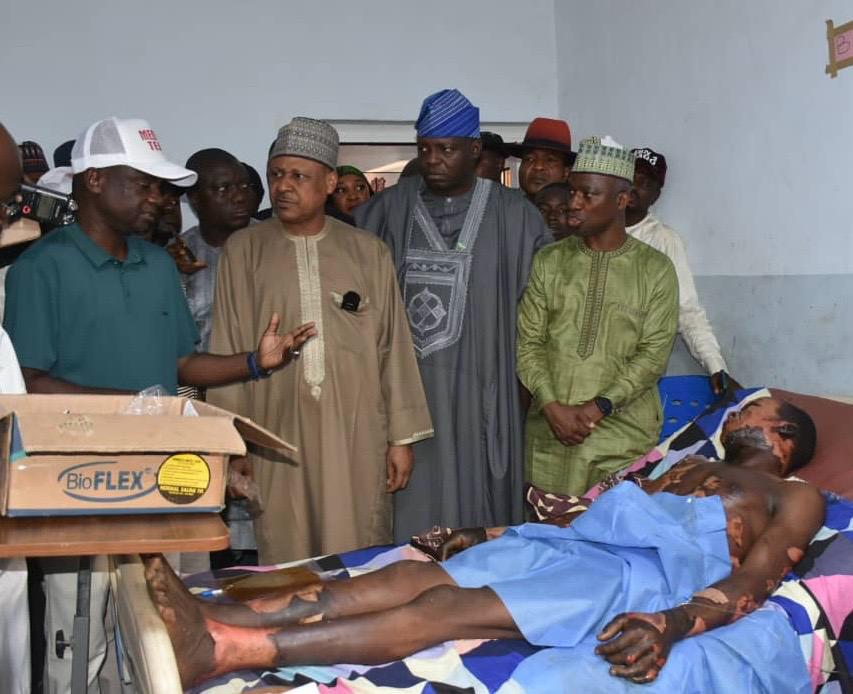

The recent tanker explosion in Suleja, Niger State, has cast a somber shadow over Nigeria, with numerous casualties and widespread destruction. In response, the Federal Government (FG) has taken decisive action by ordering the evacuation of victims from Suleja General Hospital to tertiary medical facilities. This measure aims to provide critically injured patients with specialized and immediate medical attention, enhancing their chances of survival. This article delves deeply into the circumstances surrounding the explosion, the government's response, and the broader implications for public safety and healthcare infrastructure in Nigeria.
Overview of the Suleja Tanker Explosion Incident
The tanker explosion occurred at Dikko Junction in Suleja, Niger State, resulting in significant loss of life and injuries. The tragedy unfolded when a fuel-laden tanker caught fire, leading to an inferno that engulfed the surrounding area. Initial reports indicated dozens of fatalities, with many more people severely injured and rushed to Suleja General Hospital for emergency care.
Eyewitnesses described chaotic scenes as residents attempted to rescue trapped victims while emergency responders struggled to contain the blaze. The incident is one of several tanker explosions that have plagued Nigeria recently, highlighting systemic challenges in fuel transportation safety and emergency response.
The scale of devastation prompted immediate attention from both state and federal authorities, emphasizing the urgency of coordinated efforts to address the aftermath and prevent future occurrences.
Federal Government’s Immediate Response and Evacuation Directive
Recognizing the critical condition of many victims, the Federal Government promptly ordered the transfer of patients from Suleja General Hospital to tertiary health institutions. These facilities are better equipped with intensive care units and specialized medical personnel capable of managing severe burn injuries and trauma cases.
Minister of Information and National Orientation, Mohammed Idris, led a high-level delegation to Suleja, including the Minister of Humanitarian Affairs and Poverty Alleviation, Prof. Nentawe Yilwatda. The delegation conducted an on-the-spot assessment, offering condolences to the victims’ families and assuring Nigerians of the government’s commitment to effective intervention.
The evacuation directive underscores the FG’s prioritization of victim care, aiming to reduce mortality rates by leveraging advanced medical infrastructure in tertiary centers across Nigeria.
Assessment of Medical Facilities and Healthcare Challenges
Suleja General Hospital, while pivotal in providing initial emergency treatment, lacks the comprehensive resources required for managing complex burn cases. Tertiary medical facilities typically possess specialized burn units, advanced life support systems, and multidisciplinary teams essential for patient recovery.
The move to transfer victims highlights existing gaps in Nigeria’s healthcare system, particularly in rural and semi-urban areas where access to specialized care remains limited. Strengthening these facilities is critical to improving emergency response outcomes.
Furthermore, the incident exposes the urgent need for enhanced training of healthcare workers in trauma and burn management, as well as investment in medical supplies and infrastructure to handle mass casualty events effectively.
Government’s Investigation and Preventive Measures
President Bola Ahmed Tinubu has expressed deep sorrow over the Suleja tragedy and mandated the formation of a high-powered committee to investigate the root causes of tanker explosions. This committee comprises representatives from key agencies including the Ministry of Information, Humanitarian Affairs, NEMA, the Nigerian Upstream Petroleum Regulatory Commission, and others.
The committee's mandate is to identify both immediate and underlying factors contributing to tanker accidents and propose actionable recommendations to prevent recurrence. This includes examining transportation protocols, regulatory enforcement, and community safety practices.
By fostering inter-agency collaboration and stakeholder engagement, the government aims to develop a comprehensive strategy that enhances fuel transport safety and protects vulnerable communities.
Public Awareness Campaigns and Community Education
In line with the president’s directive, the National Orientation Agency (NOA) is set to intensify public sensitization efforts regarding the dangers associated with fuel tanker accidents. These campaigns will educate citizens on the risks of approaching or attempting to scoop spilled petroleum products.
Such awareness initiatives are critical, as many fatalities in past tanker explosions have resulted from individuals attempting to collect leaking fuel, often leading to devastating fires. Educating the public on safety protocols can significantly reduce casualties.
The campaigns will utilize multiple platforms including radio, television, social media, and community outreach programs to reach diverse audiences across Nigeria, fostering a culture of safety and vigilance.
Statistical Context and Historical Incidents
The Suleja tanker explosion is unfortunately part of a disturbing trend in Nigeria, where over 265 people have lost their lives in similar incidents within the past five months alone. Previous major explosions occurred in locations such as Ibadan, Ife, Agaie, and Jigawa State, each resulting in significant loss of life and property.
These recurring tragedies have raised serious concerns about the safety standards governing petroleum transportation and the effectiveness of emergency response mechanisms in Nigeria.
Analyzing these incidents collectively provides crucial insights into patterns and vulnerabilities that must be addressed through policy reforms, infrastructural upgrades, and community engagement.
Role of Emergency Agencies and Stakeholders
Agencies such as the National Emergency Management Agency (NEMA), Federal Road Safety Commission (FRSC), and regulatory bodies like the Nigerian Upstream Petroleum Regulatory Commission play vital roles in managing tanker safety and emergency response.
The collaborative efforts of these agencies are essential for enforcing safety regulations, conducting rescue operations, and providing humanitarian assistance to affected communities.
Moreover, partnerships with industry stakeholders, including the Nigerian Association of Road Transport Owners (NARTO), the National Union of Petroleum and Natural Gas Employees (NUPENG), and the Independent Petroleum Marketers Association of Nigeria (IPMAN), are critical to ensuring compliance and promoting safe practices.
Looking Forward: Strengthening Safety and Healthcare Systems
The Suleja tanker explosion serves as a stark reminder of the urgent need to fortify Nigeria’s transportation safety protocols and healthcare infrastructure. Implementing the committee’s recommendations will be pivotal in achieving this goal.
Investments in specialized burn units, emergency response training, and public education programs must be prioritized to mitigate the impact of future accidents.
Ultimately, a multi-faceted approach involving government agencies, private sector partners, and communities is essential to safeguarding lives and fostering resilience against such disasters.
Conclusion
The Suleja tanker explosion tragedy has brought to the forefront the urgent need for a comprehensive response to Nigeria’s recurrent tanker accidents. The Federal Government’s swift action in evacuating victims to tertiary medical facilities demonstrates a commitment to saving lives and improving healthcare outcomes. However, this incident also exposes systemic challenges in transportation safety, emergency response, and public awareness. Through diligent investigation, inter-agency cooperation, and sustained public education, Nigeria can develop robust strategies to prevent such disasters in the future. Strengthening both healthcare systems and safety protocols remains imperative to protect lives and build resilient communities across the nation.