
The 2025 Africa Cup of Nations (AFCON) hosted in Morocco was more than a football tournament for Nigeria. It marked a significant turning point where sports diplomacy converged with national development strategy. Leading this charge was the National Chairman of the All Progressives Congress (APC), Professor Nentawe Yilwatda, who utilized the platform to initiate high-level dialogues aimed at transforming Nigerian football into a driver of job creation, unity, and economic growth. This article provides an in-depth look into these strategic discussions, the stakeholders involved, and the promising blueprint developed to ensure the future of Nigerian football aligns with broader national goals.

The Significance of APC's Engagement at AFCON 2025

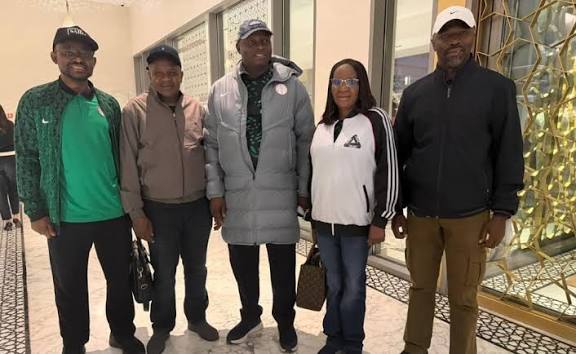
Professor Nentawe Yilwatda’s presence at AFCON 2025 transcended traditional political roles, highlighting the All Progressives Congress’ (APC) commitment to leveraging football as a vehicle for youth empowerment and national cohesion. By joining the Federal Government’s official delegation, Professor Yilwatda symbolized the intersection of politics, sports, and development.

The timing was critical. Nigeria’s Super Eagles secured a commendable third-place finish, reigniting national pride and unity across diverse communities. This success provided a fertile ground for discussions on how football’s momentum could be harnessed beyond the pitch to impact socio-economic spheres positively.

The APC’s strategic engagement at AFCON underscored the party’s vision to integrate sports diplomacy into governance frameworks. This approach aims to amplify football’s role in fostering national identity, creating employment opportunities, and stimulating infrastructural development across Nigeria.

High-Level Strategic Discussions in Morocco: Objectives and Outcomes

On the sidelines of AFCON in Rabat, a landmark strategic session convened key political leaders, technical experts, and sports administrators to chart a new course for Nigerian football. Facilitated by Mr. Silas Ali Agara, Director General of the National Directorate of Employment (NDE), the meeting focused on harnessing football as a catalyst for job creation and unity.

The discussions recognized Morocco’s football success as a model rooted in long-term planning, coherent policies, and sustained investment. Participants agreed on adapting these principles within the Nigerian context to foster a comprehensive sports economy that transcends mere match outcomes.

A major outcome was the consensus on developing a multi-dimensional framework addressing stadium construction and maintenance, coaching development, sports administration, and technology integration. This holistic approach aims to create thousands of jobs, particularly for Nigerian youth, while building sustainable sports infrastructure nationwide.

Learning from Morocco’s Sports Development Model

Morocco’s rise as a football powerhouse is attributed to visionary sports governance and strategic investment in infrastructure and talent development. The Moroccan model emphasizes grassroots engagement, professional coaching, and leveraging sports technology to enhance performance and operational efficiency.

The APC-led delegation sought to extract lessons from this model, focusing on replicable strategies that align with Nigeria’s socio-economic realities and football culture. The goal is to establish a Nigerian framework that supports sustainable growth and maximizes football’s economic potential.

Key elements identified for adaptation include public-private partnerships for infrastructure projects, data-driven talent scouting, and integrating football development with broader youth empowerment policies. This approach promises to transform Nigerian football into a vibrant sector capable of driving national development.

Political Leadership and Policy Direction for Nigerian Football

Professor Yilwatda’s leadership is pivotal in steering the ambitious vision for Nigerian football. His role encompasses providing political will, mobilizing resources, and ensuring alignment of football development initiatives with national policy objectives.

The APC chairman emphasized that football, when strategically managed, can unite Nigeria’s diverse population, create meaningful employment, and stimulate economic activities linked to the sports ecosystem. This vision requires consistent government support and innovative governance models.

Collaboration across federal, state, and local governments is essential. Professor Yilwatda advocates for policies that integrate football development into the national youth empowerment agenda, thereby ensuring that the sport serves as a platform for social inclusion and economic advancement.

Collaborative Frameworks: Role of State Governments and the Progressive Governors Forum

A critical component of the new blueprint involves active participation by state governments, coordinated through the Progressive Governors Forum. States are envisioned as primary drivers of grassroots talent cultivation and sports infrastructure development.

This decentralized approach ensures that football development is inclusive and reaches all regions, fostering national unity and maximizing talent identification. Governors are tasked with facilitating investments in stadiums, training facilities, and youth football programs within their jurisdictions.

By aligning state-level initiatives with federal strategies, the framework promotes sustainability and scalability. This cooperative model leverages local resources and expertise, creating a robust pipeline of football talent and sports-related employment opportunities across Nigeria.

Integrating Technology and Data-Driven Approaches in Football Development

Modern football development increasingly relies on technology and data analytics to enhance player performance, scouting, and administrative efficiency. The Nigerian plan incorporates these elements as crucial tools for transforming the football ecosystem.

Esebamen Clement, a policy and technology expert, leads the design of a data-driven framework that will guide talent identification, coaching standards, and facility management. This approach ensures transparency, accountability, and measurable outcomes in football development programs.

The integration of technology also opens avenues for youth engagement through digital platforms, e-sports, and sports science. This innovation creates new job categories and skill development opportunities, aligning football with the broader digital economy.

Global Insights and International Partnerships in Nigerian Football

Former FIFA Council Member and CAF leader Amaju Melvin Pinnick brings invaluable global experience to the initiative. His involvement facilitates access to international technical support, funding opportunities, and best practices in football governance.

International partnerships are expected to enhance capacity building for coaches, referees, and administrators, raising the professional standards within Nigerian football. These collaborations also provide Nigerian players with exposure to global competitions and training environments.

Such global engagement complements local efforts, positioning Nigerian football within the continental and international football ecosystems. This synergy is vital for attracting investments, sponsorships, and elevating Nigeria’s football brand worldwide.

The Future of Nigerian Football: A Catalyst for National Renewal

The strategic discussions in Morocco signal a paradigm shift in how Nigerian football is perceived and utilized. Beyond entertainment, football is positioned as a strategic platform for economic growth, youth empowerment, and national unity.

The APC’s commitment to innovative governance and global best practices ensures that football development is integrated into broader national development plans. This holistic approach promises sustainable progress and measurable improvements in employment and social cohesion.

As Nigeria prepares for future AFCON tournaments and other international competitions, the new blueprint aims to produce not only winning teams but also a thriving sports economy that benefits millions of Nigerians, fostering a renewed sense of national pride and collective progress.

Conclusion

The 2025 AFCON in Morocco presented a unique opportunity for Nigeria to redefine the role of football within its national development agenda. Under the leadership of APC National Chairman Professor Nentawe Yilwatda, strategic discussions have laid the foundation for a transformative blueprint that leverages football as a powerful catalyst for job creation, youth empowerment, and national unity. By learning from Morocco’s exemplary sports model, integrating technology, and fostering collaborative governance across federal and state levels, Nigeria is poised to build a sustainable football ecosystem that extends far beyond the pitch. This initiative not only promises sporting excellence but also envisions football as a key driver of socio-economic growth and national renewal, reflecting a bold new chapter in Nigerian sports diplomacy and governance.

Shout Out!!!