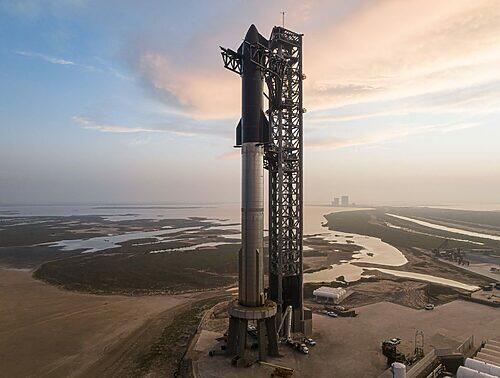

Elon Musk, the visionary entrepreneur behind Tesla and SpaceX, has long captivated the world with his ambitious plans to make humanity a multiplanetary species. At the heart of this vision is Starship, SpaceX’s next-generation, fully reusable rocket designed to carry large payloads and humans to the Moon, Mars, and beyond. While Musk’s lofty goals continue to inspire excitement, the reality on the ground remains grounded by regulatory reviews, technical obstacles, and the aftermath of a dramatic launchpad incident. This article delves into the current state of Starship, the challenges it faces, and the timeline Musk envisions for interplanetary missions.
Elon Musk’s Vision: Interplanetary Travel and Beyond
Elon Musk’s vision for Starship is nothing short of revolutionary. His goal is to create a fully reusable rocket system capable of transporting large numbers of people and cargo to Mars, effectively enabling the colonization of the Red Planet. Musk envisions Starship as a vehicle that will not only facilitate space tourism and satellite deployment but also serve as a crucial platform for humanity’s future in space.
In recent public appearances, including a high-profile interview at the International Astronautical Congress in Baku, Azerbaijan, Musk emphasized the importance of planetary alignment to optimize mission windows to Mars. He boldly forecasts a manned Mars landing within the next four years, a timeline that, while optimistic, highlights his determination to push the boundaries of space exploration.
Beyond Mars, Starship is intended to support missions to the Moon, potentially playing a role in NASA’s Artemis program by serving as a lunar lander. Musk’s broader ambition includes creating a sustainable infrastructure in space that could eventually support a self-sufficient human civilization beyond Earth.
The Technical Challenges of Starship Development
Despite Musk’s confident projections, Starship’s development has been fraught with technical challenges. The rocket’s complex design includes 33 Raptor engines on the Super Heavy booster and six on the Starship upper stage, making engine reliability and stage separation critical hurdles. Achieving flawless operation of this many engines simultaneously is unprecedented and has caused multiple test failures.
One of the most significant technical challenges is ensuring the vehicle’s reusability, including the ability to catch the booster with mechanical arms on the launch tower—a feat Musk aims to accomplish by 2024. This requires precise control during descent and landing, which remains a work in progress.
Additionally, the integration of the methane-fueled Raptor engines represents a shift from the traditional rocket propellants like RP-1 kerosene. Methalox engines promise higher efficiency but demand advanced manufacturing techniques and rigorous testing to ensure safety and performance.
The Launchpad Incident and Its Aftermath
Starship’s first full-stack test flight in 2023 ended abruptly when the launch was aborted shortly after liftoff, causing significant damage to the launchpad infrastructure. This incident underscored the risks associated with testing such a massive rocket and led to a pause in flight attempts while repairs and safety assessments were conducted.
The damage to the launchpad has delayed subsequent test launches, as regulatory authorities require thorough inspections and improvements to meet safety standards. SpaceX has been working diligently to repair the pad and implement design changes to mitigate future risks, but the timeline remains uncertain.
This incident also intensified scrutiny from the Federal Aviation Administration (FAA), which must grant launch licenses before Starship can resume flights. Musk has publicly expressed frustration with the regulatory process, suggesting that timely approvals are critical to maintaining his aggressive schedule.
Regulatory Hurdles and the Role of the FAA
The FAA plays a pivotal role in SpaceX’s Starship program by overseeing launch safety and environmental compliance. Obtaining launch licenses involves rigorous review processes, including environmental impact assessments, which have been a source of delay for Starship’s flight schedule.
Musk has criticized the FAA’s pace, implying that bureaucratic obstacles could slow progress. However, the agency must balance innovation with public safety and environmental protection, especially given the scale of Starship’s launches and their potential impact on surrounding communities.
Looking ahead, the FAA’s approval is crucial not only for resuming launches but also for enabling Musk’s goal of rapid launch cadence. Without regulatory clearance, SpaceX cannot demonstrate booster recovery or conduct the frequent flights necessary to validate Starship’s reusability and operational capabilities.
Starship’s Impact on SpaceX’s Broader Goals
While Starship’s path to operational status remains uncertain, its development is integral to SpaceX’s broader ambitions, including expanding the Starlink satellite internet constellation. Musk has indicated that Starlink’s next-generation satellites (v3) could begin deployment within a year, independent of Starship’s readiness.
The ability to launch large payloads more cost-effectively with Starship could accelerate Starlink’s expansion and improve global internet coverage. This synergy between Starship and Starlink is a key component of SpaceX’s business model, balancing ambitious exploration goals with commercial viability.
Moreover, Starship’s successful deployment would position SpaceX as a dominant player in the global space launch market, potentially outpacing competitors with its payload capacity and reusability, thereby transforming how satellites, cargo, and eventually humans are transported to space.
Learning from Past Rocket Programs: The Soviet N1 Parallel
Musk has acknowledged drawing lessons from the Soviet Union’s N1 rocket program, which, like Starship, featured multiple engines and aimed for lunar missions but suffered catastrophic failures. The N1 experienced four failed launch attempts before its cancellation nearly 50 years ago, with one failure destroying the launch complex.
This historical parallel highlights the inherent risks of pushing rocket technology boundaries. While Starship’s design shares some conceptual similarities with the N1, SpaceX benefits from decades of technological advancements and lessons learned from past programs, potentially avoiding similar pitfalls.
Nonetheless, the comparison serves as a reminder that achieving reliable, heavy-lift launch vehicles is an extraordinarily complex endeavor. Success requires iterative testing, resilience, and the ability to learn from failures without losing momentum.
The Road Ahead: Timelines and Expectations
Musk’s timeline remains ambitious, with expectations to catch the booster by 2024 and land humans on Mars within four years. However, these projections depend heavily on overcoming technical hurdles, securing regulatory approvals, and ensuring launchpad readiness.
Industry experts and SpaceX insiders recognize the difficulty of these goals, suggesting that while progress is steady, realistic timelines may extend beyond Musk’s public statements. The complexity of Starship’s systems and the novelty of its scale mean that delays and setbacks are to be expected.
Despite the challenges, SpaceX continues to innovate rapidly, conducting static fire tests, refining booster designs, and preparing for eventual orbital launches. The company’s agile approach and Musk’s relentless drive keep the dream of interplanetary travel alive, even as reality awaits on the launchpad.
Conclusion
Elon Musk’s ambitions for Starship encapsulate the bold spirit of space exploration, aiming to transform humanity’s reach into the cosmos. While the vision is inspiring and the potential transformative, the reality on the launchpad is a reminder of the immense challenges inherent in pioneering new frontiers. Technical complexities, regulatory hurdles, and infrastructure setbacks have tempered Musk’s aggressive timelines, but SpaceX’s continuous efforts signal steady progress. As the world watches, Starship remains a symbol of innovation and aspiration—where ambition soars high, even as reality patiently waits for liftoff.