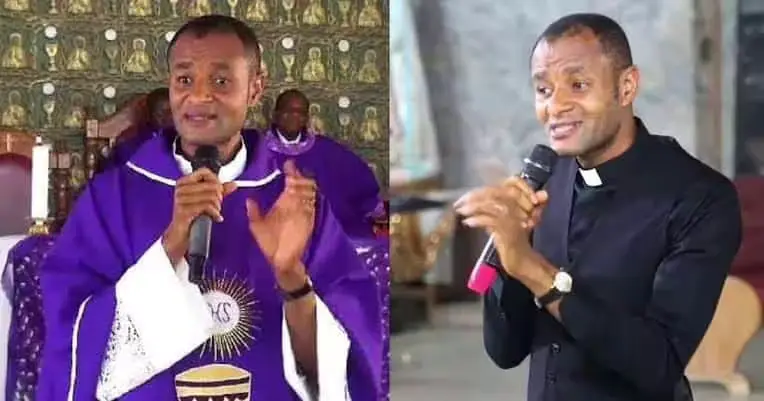

In a candid and thought-provoking message, Rev Fr Chinenye Oluoma, a prominent Catholic priest from the Archdiocese of Abuja, has challenged the leadership approach of Nigeria’s current administration under President Bola Tinubu. In his widely shared Facebook post titled 'RENEWED SHEG,' Fr Oluoma critiques the tendency of Nigerian politicians to offer hope as a substitute for real, impactful solutions. Addressing the growing frustrations of Nigerians grappling with economic hardship, insecurity, and infrastructural deficiencies, he emphasizes that hope alone cannot feed families, power homes, or secure communities. This article delves into Fr Oluoma’s compelling call for a shift in governance priorities—one that centers on jobs, security, electricity, education, and healthcare—essentials that Nigerians need urgently to thrive.

The Reality Behind Hope: A Critique of Political Promises

Rev Fr Chinenye Oluoma’s metaphor of hope as anesthesia captures the disconnect between political rhetoric and the lived experiences of Nigerians. He argues that while hope can temporarily numb the pain caused by socioeconomic challenges, it does not address the root causes of these problems. This anesthetic effect, according to Fr Oluoma, sedates citizens into complacency, masking the urgency for real change.

In his post, Fr Oluoma points to the repeated pattern where successive Nigerian governments administer 'hope' without following up with concrete policies or results. The cyclical nature of empty promises has led to widespread disenchantment, as citizens continue to struggle with unemployment, inflation, and unreliable public services.

His critique extends to the very nature of political communication, where slogans and hopeful messages replace actionable plans. This phenomenon undermines public trust and stalls progress, as hope becomes a substitute for accountability and effective governance.

Economic Challenges: Jobs, Inflation, and Currency Devaluation

One of the most pressing issues Fr Oluoma highlights is the dire need for job creation in Nigeria. With an expanding youth population and rising unemployment rates, the absence of sufficient employment opportunities exacerbates poverty and social unrest. The priest insists that governments should prioritize policies that stimulate economic growth and generate sustainable jobs.

Coupled with unemployment is the persistent devaluation of the Nigerian naira, which Fr Oluoma describes as a recurring decimal in Nigeria’s economic narrative. Currency weakness drives up the cost of living, making basic commodities like bread increasingly unaffordable for many households.

The inflationary pressures and shrinking purchasing power create a harsh environment where hope cannot substitute for tangible improvements. Nigerians face the daily reality of struggling to afford food, pay school fees, and cover healthcare costs, underscoring the urgency for economic reforms that address these fundamental challenges.

Electricity and Infrastructure: The Backbone of Development

Reliable electricity supply remains a critical issue in Nigeria, directly impacting businesses, education, and quality of life. Fr Oluoma stresses that consistent power provision is not a luxury but a necessity for national development and economic stability.

The lack of stable electricity forces many Nigerians to rely on costly alternatives such as generators, increasing household expenses and limiting business productivity. This infrastructural deficit hampers efforts to improve living standards and economic competitiveness.

Fr Oluoma’s call for governments to provide electricity instead of hope underscores the need for strategic investments in power generation, transmission, and distribution. Sustainable energy solutions are essential to breaking the cycle of underdevelopment and fostering inclusive growth.

Security Concerns: A Fundamental Need for Nigerians

Security remains a paramount concern for Nigerians, affecting personal safety, business operations, and national stability. Fr Oluoma points out that without safety and protection, other developmental gains become meaningless as citizens live in fear and uncertainty.

The rise of insurgency, banditry, and communal conflicts has heightened the demand for effective security strategies. Fr Oluoma urges the government to prioritize security reforms that ensure law enforcement agencies are well-equipped and motivated to protect lives and property.

By emphasizing security alongside jobs and infrastructure, Fr Oluoma highlights the interconnectedness of these issues. A secure environment is foundational for economic activities, educational pursuits, and social cohesion.

Education and Healthcare: Essential Services for National Progress

Education and healthcare are pillars of human capital development, yet many Nigerians face challenges accessing quality services in these sectors. Fr Oluoma insists that governments must provide affordable and accessible education and healthcare rather than merely promising improvements.

The high cost of school fees and medical bills places a heavy burden on families, limiting opportunities for many children and adults to improve their circumstances. Fr Oluoma’s message calls for policies that prioritize funding, infrastructure, and reforms to make these services universally available.

Investing in education and healthcare not only improves individual wellbeing but also drives national development by creating a healthier, more skilled workforce capable of contributing meaningfully to the economy.

The Role of Politicians and Religious Leaders in Governance

Fr Oluoma provocatively questions why politicians often take on the role of preachers, offering hope instead of concrete solutions, while religious leaders sometimes promise material prosperity beyond their scope. This role reversal, he argues, confuses citizens and dilutes accountability.

He advocates for a clear distinction where politicians focus on delivering jobs, security, and essential services, while clerics provide spiritual guidance and hope. This separation ensures that each group operates within its strengths and responsibilities.

By calling on politicians to abandon empty rhetoric and embrace pragmatic governance, Fr Oluoma challenges the status quo and encourages a more honest and effective leadership approach that prioritizes the people’s real needs.

A Call for Renewed Governance Focused on Tangible Outcomes

The overarching theme in Fr Oluoma’s message is the urgent need for Nigerian leaders to shift from symbolic gestures to substantive actions. He calls for a governance model centered on delivering measurable improvements in citizens’ lives.

This renewed focus involves creating job opportunities, stabilizing the economy, ensuring security, improving infrastructure, and providing quality education and healthcare. Such a comprehensive approach would address the multifaceted challenges Nigerians face daily.

Fr Oluoma’s plea is a reminder that governance is not about maintaining illusions but about performing the difficult but necessary work of policy implementation, resource management, and accountability to foster national progress.

The Impact of ‘Renewed Shege’ on Nigerian Society

Fr Oluoma uses the term ‘Renewed Shege’ to describe the cyclical mismanagement and worsening conditions under successive administrations. This phrase encapsulates the frustration felt by many Nigerians who witness repeated economic decline and social hardship despite changes in leadership.

Each government, according to Fr Oluoma, seems to renew the challenges rather than resolve them, leaving citizens trapped in a cycle of despair and unmet expectations. This phenomenon erodes public trust and hampers collective efforts to address national issues.

Acknowledging the existence of ‘Renewed Shege’ calls for urgent systemic reforms and a break from past governance patterns. It challenges all stakeholders to commit to genuine change that lifts Nigerians out of hardship and restores hope grounded in reality.

Conclusion

Rev Fr Chinenye Oluoma’s candid admonition to President Bola Tinubu and the Nigerian government underscores a fundamental truth: Nigerians are yearning for more than hopeful rhetoric; they demand action. The persistent challenges of unemployment, insecurity, unreliable electricity, and inadequate social services cannot be masked by words alone. Fr Oluoma’s insightful critique serves as a clarion call for leaders to prioritize pragmatic governance, focusing on creating jobs, ensuring security, and delivering essential services. As Nigeria navigates its complex socio-political landscape, embracing this shift could pave the way for meaningful progress and renewed confidence among its citizens. Ultimately, hope must be earned through tangible results, not merely offered as a comforting but ineffective promise.

Shout Out!!!